

 Refresh
Sustainable Practices, Climate-Conscious Ingredients, Zero Waste Closed-Loop Cooking Methods.
Want to win a job like this?
This customer received 31 PowerPoint designs from 5 designers. They chose this PowerPoint design from pb as the winning design.
Join for free Find Design Jobs
-
 £80
£80
-
 31 designs
-
 5 designers
PowerPoint Design Brief
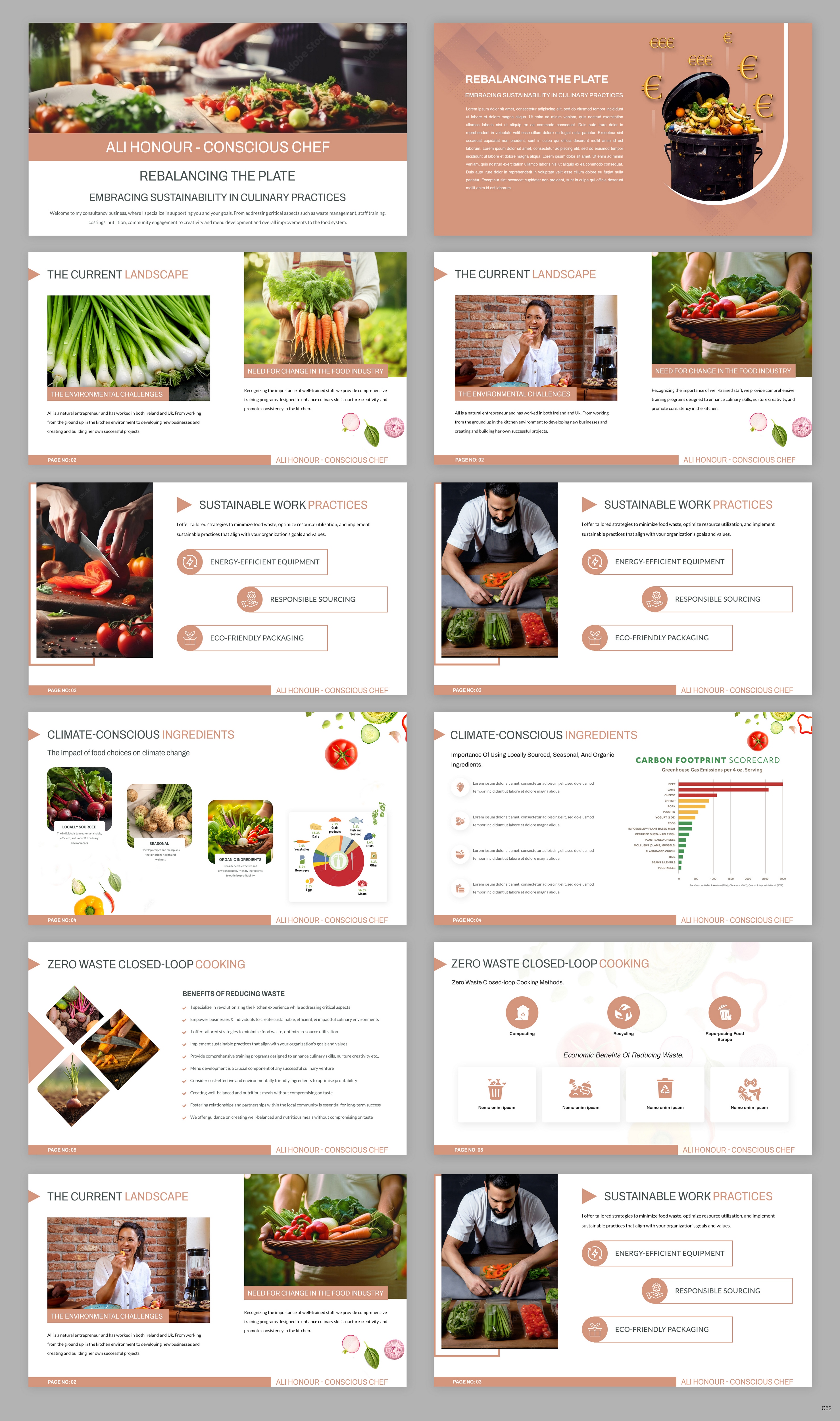
Image1: Introduction
Title: Rebalancing the Plate
Subtitle: Embracing Sustainability in Culinary Practices
Briefly introduce the importance of sustainable work practices in the culinary world.
Image 2: The Current Landscape
Highlight the environmental challenges associated with conventional culinary practices.
Emphasize the need for change in the food industry.
Image 3: Sustainable Work Practices
Define sustainable work practices in the culinary context.
Examples: energy-efficient equipment, responsible sourcing, and eco-friendly packaging.
Image 4: Climate-Conscious Ingredients
Discuss the impact of food choices on climate change.
Emphasize the importance of using locally sourced, seasonal, and organic ingredients.
Mention the carbon footprint of different food types.
Image 5: Zero Waste Closed-Loop Cooking
Define zero waste closed-loop cooking methods.
Provide examples: composting, recycling, and repurposing food scraps.
Discuss the economic benefits of reducing waste.
Image 6: The Chef's Role
Emphasize the influential role chefs play in promoting sustainable practices.
Share success stories of renowned chefs adopting sustainable and zero-waste practices.
Image 7: Benefits of Sustainable Cooking
Outline the environmental benefits.
Discuss potential cost savings and economic advantages.
Highlight the positive impact on community and customer perception.
Image 8: Challenges and Solutions
Acknowledge the challenges of implementing sustainable practices in the culinary industry.
Offer practical solutions and strategies to overcome these challenges.
Image 9: Case Studies On the sustainable foods- Beans
Why they are a powerhouse for both people and planet
Image 10: Call to Action
Encourage the audience to adopt sustainable practices in their own culinary endeavors. developing menus, bringing beans into their menus and zero waste cooking practices.
Provide resources and tools to support the transition to sustainability.
Image 11: Q&A
Open the floor for questions and discussions.
Image 12: Conclusion
Summarize key points.
Reinforce the importance of adopting sustainable work practices in the culinary industry.

Updates
Designs not quite right, have given instruction for improvements and awaiting replies, so need the few days more please
Target Market(s)
Chef, Senior managers, owners
Colors
Colors selected by the customer to be used in the logo design:
Look and feel
Each slider illustrates characteristics of the customer's brand and the style your logo design should communicate.
Elegant
Bold
Playful
Serious
Traditional
Modern
Personable
Professional
Feminine
Masculine
Colorful
Conservative
Economical
Upmarket
Requirements
Must have
- impact Climate conscious ingredients, and importance of stopping food waste in a kitchen
Should not have
- fake chef pictures or prepeared food dishes


