

 Refresh
The Hearth & Quill
Want to win a job like this?
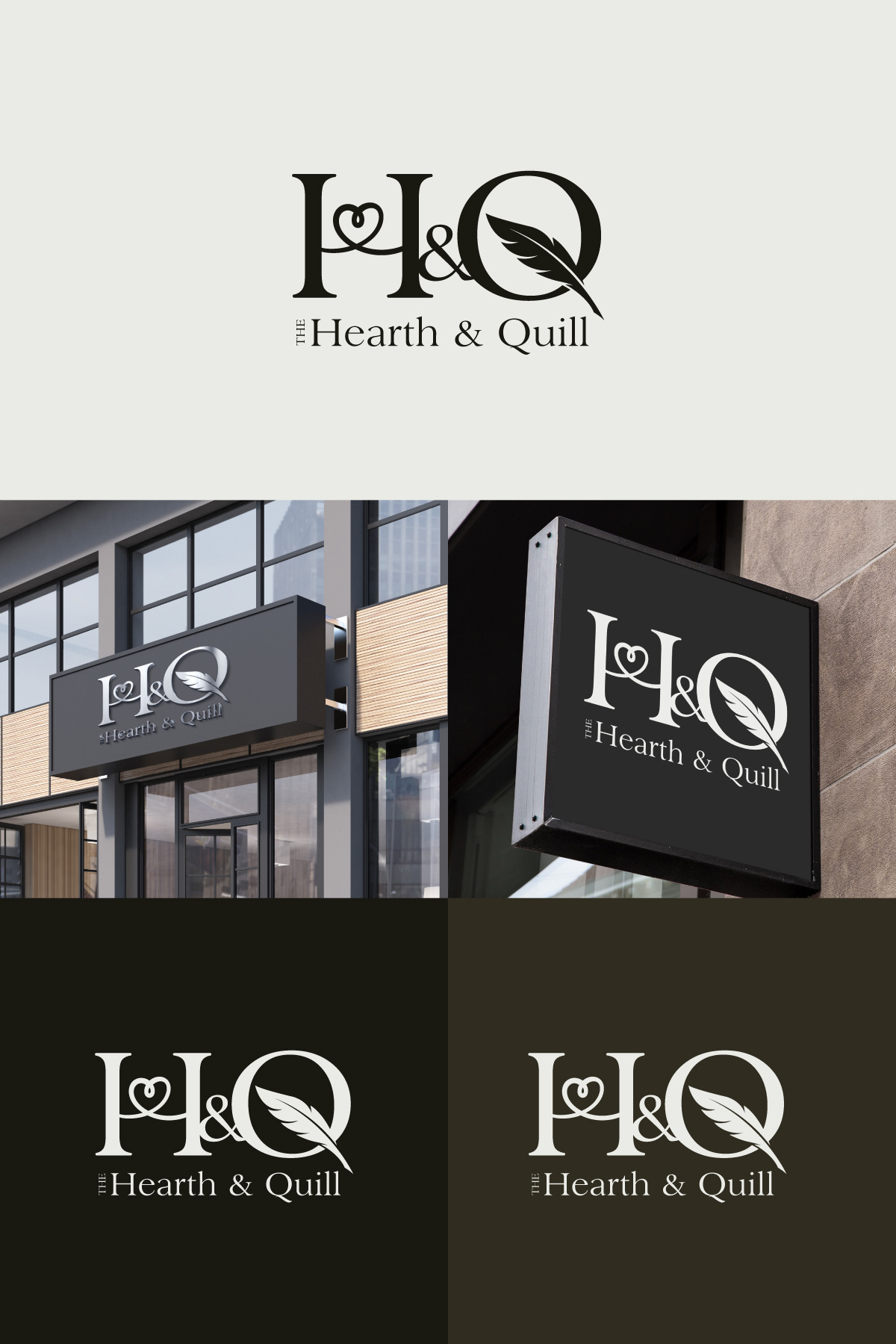
This customer received 129 logo designs from 57 designers. They chose this logo design from Sergio Coelho as the winning design.
Join for free Find Design Jobs
- Guaranteed
-
 A$150
A$150
-
 129 designs
-
 57 designers
Logo Design Brief
The Hearth & Quill
1. Business Overview
The Hearth & Quill will start its life online bookstore when it discovers the perfect location to become an independent bookstore and gathering space that will host author events, creative workshops, bookbinding classes, art sessions, wellness offerings, and other community gatherings. The business is centred on books, independent authors, storytelling, and shared creative experiences.
The Hearth & Quill is intended to feel established, intentional, and enduring, operating respectfully within the character of a heritage building.
2. Brand Intent & Philosophy
The logo must function as a timeless literary signature, closer to a publisher’s imprint or cultural institution mark than a retail or hospitality logo.
It should communicate:
• Trust
• Performance
• Craft
• Literary credibility
• Quiet Warmth
3. Brand Essence Statement
Brand Essence:
A place where stories, creativity, and community gather.
This statement should guide all design decisions.
4. Relationship to Interior Design (Critical Guidance)
The interior design references:
• Edwardian reading rooms
• Early 20th Century libraries and salons
• Warm timber, sage greens, parchment tones, and brass accents.
However:
The logo must not directly replicate:
• Interior colours
• Decorative motifs
• Period ornamentation
• Textures or materials
Instead, the logo should:
• Harmonise with the physical space
• Feel historically appropriate
• Retain its own visual authority and independence
Think of the logo as something that could exist on:
• A book spine
• A Publisher’s colophon
• Letterpress stationary
• A heritage shopfront
5. Brand Personality & Emotional Hierarchy
Core Attributes:
• Literary
• Considered
• Calm
• Grounded
• Thoughtful
• Quietly Confident
Emotional Priority:
• Primary: Trust & calm authority
• Secondary: Warmth & curiosity
• Tertiary: Subtle enchantment
The brand should never feel loud, trendy, novelty-driven, or commercial-first.
6. Distinctiveness Requirement (Essential)
The logo must be distinguishable from other independent bookstores, creative spaces, and cultural venues.
Designs relying on common visual tropes will not be considered, including:
• Open or stacked books
• Literal flames or fireplaces
• Cartoon, or illustrated quills
• Laurel wreaths
Originality, restraint, and clarity are essential.
7. Logo Design Direction
Overall Aesthetic
• Timeless
• Editorial
• Restrained
• Refined
• Highly legible
The logo should feel as though it could have existed for decades and yet still feel relevant decades into the future.
8. Typography Direction (Primary Focus)
A typography-led logo is strongly preferred.
Typography Characteristics:
• Seif or transitional serif
• Literary or editorial influence
• Balanced proportions
• High legibility at small scale
• Subtle character without ornamentation
Acceptable Influences
• Early 20th Century book typography
• Publisher wordmarks
• Printmaker and bookplate lettering
• Edwardian era signage
9. Symbol/Mark Usage (Optional)
A symbol is not required. If included, it must be:
• Initials (H & Q)
• Framed mark or seal
• Subtle hearth or gathering geometry
• Bookplate or colophon style mark
• Architectural framing inspired by Edwardian details
10. Colour Direction (Logo Specific)
The logo must be designed to function first and foremost in monochrome.
Primary use:
• Charcoal or ink on light backgrounds
• White on dark backgrounds
Secondary/Accent Use
• Muted green tones
• Warm metallics (aged brass or antique gold) for print or signage only.
Colour must support the logo, never define it.
11. Practical Evaluation Test
The logo should pass all of the following tests:
• Reads clearly at 30mm wide
• Works in pure black and white
• Feels credible on a book spine
• Can be embossed, foiled, stamped, and or etched
• Looks appropriate without surrounding context
12. Acceptable Logo Structures
Designers may explore:
• Wordmark
• Lettermark (H & Q)
• Wordmark with optional secondary seal
Exploration should remain restrained and purposeful.
13. Applications & Use
The logo must reproduce cleanly across:
• Exterior heritage signage
• Window decals
• Printed programs, posters, and signage
• Bookplates, bookmarks, and tags
• Website and social media
• Merchandise and printed ephemera
14. Deliverables Required
The final logo package must include:
• Primary logo
• Secondary/stacked logo
• Icon and or mark – if applicable
• Monochrome versions
• Colour specifications
• Font Pairings
• Usage guidelines
• Editable source files
15. Intellectual Property & Exclusivity
All logo designs must be:
• Fully original
• Not derived from stock assets or templates
• Not AI-generated or AI-assisted without disclosure
Full and exclusive intellectual property rights must be transferred upon selection/final payment.
16. Measure of Success
The logo is successful if it:
• Feels timeless and established
• Sits naturally within a circa 1910s setting
• Stands independently from interior design
• Feels appropriate for a literary imprint or cultural institution
• Makes authors proud to be associated with it
• Still feels right in 20+ years
17. Key Words for Designers
Literary, Editorial, Imprint, Performance, Trust, Connectivity, Calm Authority, Craft, Heritage, Quiet Confidence, Community, Longevity
Final Guidance to Designers
This logo should feel considered rather than clever, confident rather than decorative, and enduring rather than fashionable.
Logo Text
The Hearth & Quill